Your Brand Was Born on Pinterest. That's the Problem.
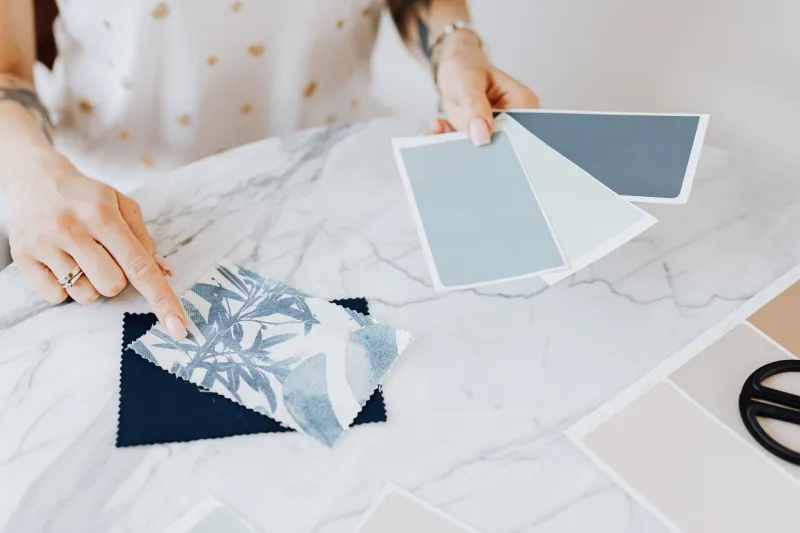
Open a mood board from the last two years and play a little game: guess the brand. Chances are you can't. Muted earth tones. A slightly irregular sans-serif. Grainy film photography of hands holding ceramic cups. A lone arch shape, maybe a wavy line. It's beautiful. It's also the exact same board your competitor made on a Tuesday night.
We're not anti-inspiration here at Hey Atlas Creative. We're anti-shortcut. And somewhere along the way, the mood board stopped being a tool and became the whole blueprint — and it's flattening brands across every industry from Austin to Boston.
The Algorithm Knows What You Like (And So Does Everyone Else)
Here's the uncomfortable math. The pins that rise to the top of any visual platform got there because thousands of people saved them. Popularity is the sorting mechanism. So when you start your brand process by building a board, you're not mining for what makes you different — you're averaging toward what everyone already agrees looks good.
Designers call this convergent thinking, and inspiration platforms supercharge it. You see a hundred similar palettes, your taste recalibrates, and by pin number forty, the outlier ideas that might've actually differentiated you start to feel "off." Your eye gets trained on the median. Then you ship the median.
The result? Coffee shops, SaaS startups, boutique fitness studios, and law firms all wearing variations of the same outfit. Not because anyone copied anyone — because everyone started in the same place.
Inspiration Isn't Strategy. It's Decoration.
A mood board answers one question: does this look nice? It can't answer the questions that actually build a brand:
- Who are we for, specifically — and who are we happily not for?
- What do we believe that our competitors would never put on a billboard?
- What should people feel in the first five seconds, and what visual choices earn that feeling?
Those are strategy questions. And when you skip them, the mood board fills the vacuum with generic taste. Tasteful is not the same as memorable. Plenty of brands are impeccably tasteful and completely forgettable — you've scrolled past a hundred of them this week.
Flip the Order: Story Before Swatches
When we build identity systems, the visual exploration doesn't start until the strategy is locked. Not because we're precious about process, but because strategy is what makes the board yours. Here's the rough sequence:
1. Write the story in plain English first. One page. Who you serve, what you stand against, why anyone should care. No adjectives like "modern" or "clean" — those are aesthetics wearing a strategy costume.
2. Translate the story into three to five visual principles. If your brand is about cutting through bureaucracy, one principle might be "ruthless clarity — nothing decorative survives." Now every image, color, and typeface gets judged against a rule, not a vibe.
3. Build the board with a thesis. Instead of "things we like," it becomes "evidence for the principles." A pin earns its spot by arguing for your strategy. If it doesn't argue, it doesn't stick around.
4. Stress-test against the feed. Place your new identity next to your five closest competitors. If it blends in, the board wins and you lose. Go back to principle two.
The Test: Could Your Competitor Claim Your Board?
Here's the gut-check we give clients: look at your mood board and ask whether your biggest rival could present it as their own without changing a thing. If yes — and for most boards, the answer is yes — you've built a mood, not a brand.
Moods are rented. Brands are owned. The fix isn't deleting your Pinterest account; it's making sure that by the time you open it, you already know exactly who you are and what you're looking for. Inspiration should sharpen a point you've already made — not make the point for you.
Your story is the one asset nobody else on the feed can pin. Start there, and the visuals will finally look like something worth remembering.